

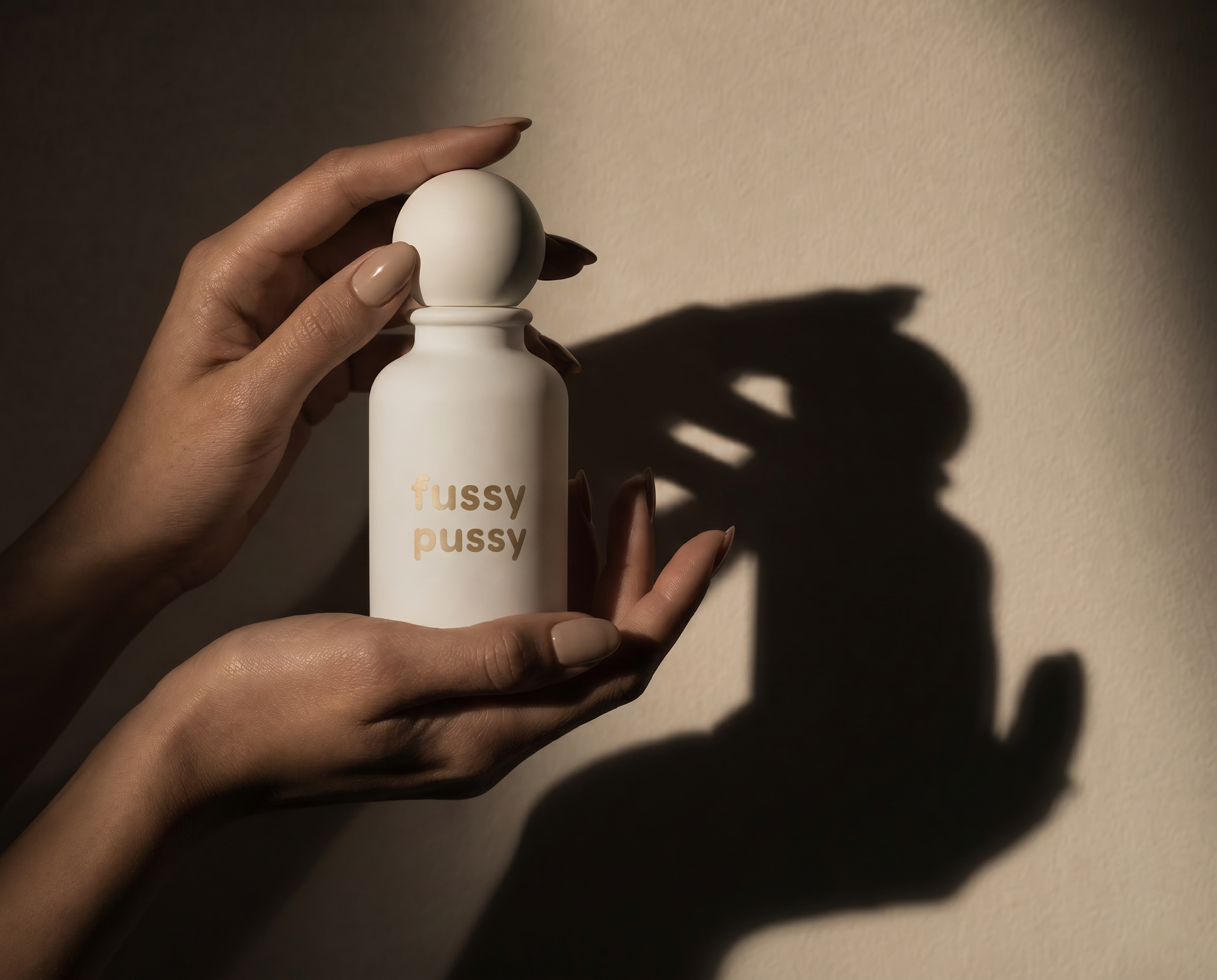
Your body is also a scent composition. Perfumes don't land on neutral skin, but on skin that remembers the morning coffee, the rush to a meeting, and an aromatic lunch. Your skin reacts to stress, emotions, and the rhythm of the day. It produces sebum and has its own unique microbiome.
That is why the same scent is never exactly the same on two different people. Nor even the same scent on two different versions of you. On one skin, a perfume might smell pleasant; on another, quite the opposite. This doesn't necessarily mean something is wrong with the perfume. It simply means the perfume has started talking to the body.
This is one of the most beautiful and underrated things about fragrances. The skin becomes a second perfumer. Sometimes fickle, sometimes brilliant. A person's scent is not an error in perfume perception. It is part of the composition. Perfume alone doesn't decide how you smell.
Why does the body have a scent and how does it affect perfume perception?
Let's start with something that sounds very simple but changes the way we think about body odor: sweat itself is largely odorless. The characteristic scent of skin is only created as a result of interactions between skin secretions, metabolites from the body, and the skin's microbiome.
Our body produces sweat, sebum, and various compounds that may be almost undetectable on their own. It is only on the skin's surface that some of these are transformed by the bacteria making up the microbiome. This is when volatile molecules are created, which our nose can interpret as a scent.
This is particularly evident in areas where apocrine glands are located, such as the armpits. These glands don't simply produce a 'bad smell,' but a secretion richer in components that can be transformed by skin bacteria. Only after such a transformation are fragrance molecules created—the particles we actually smell.
It is therefore worth separating natural body odor from the smell of an unwashed body. They are not the same thing. And for perfumes, this difference matters.
Perfumes can beautifully blend with the natural scent of clean skin, its warmth, and its individual chemistry. But if sweat, dirt, residues of intense cosmetics, or scents from the previous day remain on the skin, the composition may be perceived completely differently. Instead of developing on the skin, it begins to mix with something we never intended to test. A person's natural scent is not a bad thing. But the skin needs washing, freshness, and care. Clean skin simply provides a clearer canvas for the perfume to work.
A person's natural scent is not exclusively information about whether someone has washed. It is much more complex. It is influenced by the microbiome, hormones, diet, hydration, body temperature, stress, health, medications, skincare, and even skin type—dry, oily, warmer, cooler, more or less reactive.
And that is exactly why skin scent is one of the most personal signals we have. Perfumes meet it every time we wear them. They don't smell in a vacuum. They smell on you.
Why do perfumes smell different on different people?
This is probably one of the most common perfume surprises: someone smells incredible, you ask about the fragrance, you buy the same bottle, spray it on yourself, and... it's not exactly the same. Sometimes it's still beautiful, just different. It disappears faster and won't linger, even though you could smell it from afar on someone else. Sometimes a note that smelled beautiful on another person becomes too strange on your skin. This doesn't mean anyone deceived you. Perfumes never smell alone. They always smell with the person and in a specific environment.
Every skin has slightly different conditions. One person will have more sebum, while another will have drier skin. One skin warms up faster, another is cooler. We differ in hydration levels, pH, microbiome, diet, hormones, medications, supplements, health status, skincare, and natural body odor. Added to this is the environment: temperature, humidity. It also matters whether the perfume was applied to bare or moisturized skin, clothing, or hair. The skin and the environment are never neutral.
This is why the same fragrance can behave differently on different people. It doesn't start from the same place. On one skin, light notes will evaporate faster; on another, sweetness will linger longer. In one person, creaminess will be more prominent; in another, green notes, smoke, acidity, or spices. Sometimes the difference is subtle, and sometimes it's so large it's hard to believe it's the same bottle.
Even health can matter. Infections, hormonal changes, certain medications, supplements, or metabolic disorders can affect the scent of skin and sweat. Not always in a strong or easily noticeable way, but enough for the perfume to sit on the body differently than on someone else.
A 2012 study by Lenochová and co-authors showed this very interestingly. Researchers tested how perfumes change the perception of natural body odor. It turned out that samples with perfume were usually rated more pleasantly than the body odor alone, but the effect depended on the specific person and combination. Most interestingly, a mixture of a person's natural scent with their own self-selected perfume was rated better than the combination of the same body odor with a randomly chosen perfume.
This sounds like a scientific argument for something many people feel intuitively: sometimes a scent is simply 'yours.' It doesn't mask you, it doesn't fight you, it doesn't make you someone else. It simply starts to sound like a part of you.
Therefore, choosing a perfume only based on how it smells on another person or solely on a blotter can be deceptive. Paper will show the direction of the composition, but skin will show the relationship: what happens when the scent meets a specific body.
A scent like Cherry bomb, smells like juicy liqueur cherry on you, but on your boyfriend, it might become more tobacco-like. The jasmine Flutter Butter, which is clean and floral on a blotter, might come out more creamy or green on the skin. And rhubarb Tangy Tankie can be more juicy and fruity at times, and more acidic, greener, and stalk-like at others.
Perfumes are a composition, but skin is an interpretation. They only start to live when someone wears them.
Why do you love a perfume one day and not the next?
Do you know that feeling? Yesterday the scent was perfect and 'yours.' But today the same bottle smells too sweet or too heavy. The first thought: something is wrong with the perfume. But very often, it's not the perfume that changed. The day and the skin wearing that day have changed. Perfumes can settle differently not only on different people but also on different versions of you.
A body after a sleepless night is not the same as a body after a peaceful weekend. Skin after stress, a cold, alcohol, intense training, or a week without proper rest can release scent differently. The hormonal cycle, dehydration, dry skin, the lotion you applied in the morning, coffee instead of breakfast—everything that seemingly has nothing to do with perfume can change perfume perception.
Weather also matters. On a hot summer day, the same perfume that was soft and cozy in winter can suddenly seem overwhelming. High temperature accelerates fragrance evaporation, so the composition may be stronger and more present. Frost, on the other hand, can quiet some notes, and dry air in heated rooms makes the skin lose moisture faster, and sometimes the scent along with it.
Then there's the nose. It isn't a machine either. When you are tired, overstimulated, or surrounded by many scents, even a beloved perfume can start to bother you. The sweetness you usually like can be exhausting. A sharp note that was previously interesting can be irritating. It's a bit like a favorite song. It's still good, but not necessarily when you have a headache.
Olfactory accommodation also plays a role—the nose getting used to a scent. Sometimes after several minutes, you stop smelling your own perfume not because it's gone, but because your brain has classified it as a constant background element. Someone nearby can still smell it, while you feel the scent has completely vanished.
There's also memory. Scents attach to situations very easily. If you wore a specific perfume on a beautiful day, it can later smell like safety, flirting, vacation, or a new life. If it accompanied you during a difficult time, the nose may remember not only the composition but also the tension, sadness, stress, or fatigue. Sometimes a perfume doesn't stop being beautiful. It simply starts being associated with something the body no longer wants to feel. That is very human.
It's worth not passing judgment after just one spray, especially if you're testing a new scent. Because perfume is not just a first impression. It's a relationship with skin, the day, and memory. Sometimes it's love at first spray. Sometimes it's a scent that needs a second meeting. And sometimes it's something beautiful, but just not for you. And that's okay, too.
The trap of testing perfumes and reviews
This is why testing perfumes can be tricky. You spray a scent on a blotter, wave the paper in the air, feel the first impression, and already want to decide: yes or no. A blotter is useful because it shows the direction of the composition. You can quickly check if the scent leans more toward sweetness, freshness, or cleanliness. It can also help you reject something that is immediately not for you. But paper won't show the whole truth. It lacks natural body odor and all its chemistry. Therefore, a blotter shows the composition in more neutral conditions, while the skin shows what really happens with it.
It's the same with reviews. Just because someone loves a scent doesn't mean you will too. And vice versa: if someone writes that a perfume is strange, too sweet, too sharp, or not long-lasting, it doesn't necessarily mean it will behave that way on your skin. Reviews are helpful, but they are also the story of someone else's skin, someone else's nose, someone else's day, and someone else's associations.
One spray in a drugstore isn't always enough either. Especially if you're testing several scents at once, standing in a heavily perfumed space, wearing other cosmetics, or if you're tired, hungry, and overstimulated. The nose quickly loses its edge, and the skin doesn't always have the conditions to showcase the scent properly.
The fairest thing is to give the perfume some time. Test it on your own skin, not just on paper and not just on someone else. See what happens after a few minutes, after an hour, after several hours. Does the scent become more pleasant? Does it start to feel tiring? Does it disappear quickly or stay close to the skin? Do you keep bringing your nose back to it because something about it attracts you?
And if you can, test it more than once. Not because perfumes are a riddle to be solved, but because skin is not the same every day. The first thrill or the first dislike is important, but with perfumes, it's worth leaving some room for a second encounter.
Perfumes are best experienced when they start to live on the skin.
How does food change skin scent and perfume perception?
It sounds strange, but what we eat really can affect body odor.
Food doesn't disappear in the body without a trace. What we eat is digested, broken down, processed, and integrated into the body's entire system. Some compounds enter the blood, some are metabolized in the liver, and some are excreted through breath, urine, or sweat. And some of these compounds can later affect how our body smells.
You don't have to worry that your skin will start smelling like a plate of food after lunch. That would be too simple. It works more like a subtle change in the background against which the natural skin scent and perfume then settle. A body after alcohol, sharp spices, large amounts of garlic, onions, or a heavy, fatty meal may smell different than on a day when you ate lighter and drank more water.
Garlic and onions are the most obvious examples here because they contain sulfur compounds. After consumption, they are metabolized, and part of their scent can return to us not only through breath but also through the skin. This is why we sometimes feel that an intense meal 'stays' with us longer than the dinner itself.
Alcohol works a bit differently. The body must break it down, and the products of this process can affect breath and skin scent. Additionally, alcohol can increase sweating, dehydrate, and make the body smell sharper the next day, as if it were more tired and less fresh.
Sharp spices like chili don't necessarily change skin scent in a simple way. More often, they affect body temperature and sweating. And the more sweat, heat, and moisture on the skin, the greater the role the skin's microbiome plays. Body odor is not a single ingredient. It is the result of an entire system.
Meat, especially red meat, is also sometimes identified as a product that can affect body odor. A heavier, more meat-based diet can change the way the body smells from the inside. Similar to alcohol, lack of sleep, stress, or intense spices.
Diet is therefore one of those factors we rarely associate with perfumes, yet it can change their perception.
Does a plant-based diet make the body smell different?
Maybe you've heard that people on a plant-based diet smell milder? It sounds a bit like an internet legend, but in this case, science gives us some interesting clues.
Not clues that allow us to say: 'vegans always smell better.' The body is too complex for that. But interesting enough to treat a plant-based diet as something that can affect not only the body, animals, and the planet, but also the natural scent of the skin.
In one of the classic studies on diet and body odor, the axillary scent of men on a diet without red meat was rated as more attractive, more pleasant, and less intense than after a period of eating red meat (Havlíček and Lenochová, 2006). This provides evidence that red meat may be one of the elements that less favorably affects body odor.
The second clue is even more in our style: fruits and vegetables. In a 2017 study by Zuniga and co-authors, higher levels of carotenoids in the skin—compounds present in many fruits and vegetables—were associated with sweat rated as more pleasant, fruitier, more floral, and sweeter (Zuniga et al., 2017). It sounds almost like a perfume description, but we are still talking about natural body odor.
And here it's worth being honest. This is not proof of a simple equation: plant-based diet = beautiful skin scent. But the direction is promising.
A diet based on plenty of plants, fruits, vegetables, water, herbs, and fermented products can support a milder, fresher skin scent. We don't guarantee that a plant-based diet will always make perfumes smell better on your skin. It's more about something subtler: a body nourished more lightly, more on a plant basis, and with more variety may smell different. There are indications that it often smells more pleasant. And since perfumes mix with the skin's scent, everything that affects natural body odor can indirectly influence the perception of the perfume as well.
So, what can be done practically?
Can you create a better base for perfumes?
In a way, yes, but not in the way internet hacks promise. There isn't one single thing you can eat, drink, or rub into your skin to suddenly make the body a perfect base for every scent. Skin doesn't work like a blank sheet of paper. It is alive, changing, and very sensitive to how we treat our entire body.
But you can help it.
Quite simply: make sure it is more hydrated and less overloaded. Perfumes usually settle better on skin that is not dry, irritated, or exhausted by an excess of intense stimuli. Therefore, sometimes something very ordinary matters more than another spray: water, sleep, gentle washing, body lotion, less alcohol, and less rushing.
This doesn't sound spectacular. But the body likes things we do regularly.
If you really want to check how a scent works on your skin, it's worth limiting alcohol and very intense meals the day before—for example, lots of garlic, onions, red meat, or sharp spices. These don't necessarily 'spoil' the perfume, but they can change the scent of skin, breath, and sweat. A plant-based, lighter diet and proper hydration can support the body from the inside, but when it comes to the testing itself, what you do directly to the skin also counts.
That's why skincare is also important. If you want to check a scent truly fairly, it's best to test it on clean skin. Without a random mixture of an intensely scented lotion, antiperspirant, hairspray, and three other perfumes from the day before. The point is to leave no traces of sweat, dirt, or intensely scented cosmetics on the skin. Skin doesn't have to be 'perfect,' but when it is fresh, it's easier to feel how the perfume really settles on it.
Therefore, it's good to start with a gentle wash. One that provides freshness but doesn't leave the skin dry and irritated. You can reach for a mild shower gel, a trusted soap, or, if you like skincare in the same fragrance direction, a lilac-scented body soap like Bubble and Blubber. It's a good choice, especially when you want the lilac scent to start right in the shower.
After washing comes moisturizing. Perfumes often settle more beautifully on skin that has a good barrier, is soft, elastic, and not dry. If you are testing a scent you don't know yet, an unscented lotion, oil, or cream will be the safest, as they won't mix with the composition or change the first impression, giving the scent a place to settle and last longer.
But if you already know your scent and want to wear it more consciously, you can use skincare for layering. The fluffy lilac-scented body lotion Blubber Fluffer has the same lilac scent found in the perfume Doggy Siren, making it a long-lasting base for them. It can also add a soft, floral, May-like background to other perfumes.
The most important thing, however, is not to turn this into pressure. Treat these as tips, not a list of requirements. You don't need a perfect diet, perfect skin, and eight hours of sleep to wear perfume. Perfumes are precisely for living. For beautiful and strange days. For mornings after a night that was too short. For dates, stress, holidays, work, trains, exams, and ordinary Tuesdays.
Perfumes for Real Skin
At Söppö, we don't think of perfumes as a scent for neutral, ideal laboratory skin. We think of them as a scent for a person.
For skin after coffee, after a walk, after laughter, after stress, after summer, after winter, after a good and strange day. For someone who wants to smell like themselves in their life—only a little bit more.
We create perfumes so that someone can find something of their own in them: a memory, a mood, a place, a person, a season, a little story that can't be fully explained but is immediately felt under the skin.
We like to think of perfumes as memory capsules. But such a capsule only opens when it meets a person. Only then does the scent stop being just a composition in a bottle and start being something personal.
Scent is an Encounter
Perfumes are not a monologue by the bottle. They are an encounter between the composition, the skin, the body, memories, and emotions. Between what was created and what the person brings: their warmth, mood, history, and the specific day they are in.
That's why the same scent can smell like pure summer on someone, and like a memory of a kitchen, a touch, the sun, or a first date on someone else. It can be safe one day and a bit too strong the next. It may need time. It may need skin. It may need you at a different moment.
And that is exactly what is so human about perfumes. They are not just a scent locked in glass. They are a little story that changes every time someone wears it.
FAQ - Frequently Asked Questions about skin scent and perfume perception
Why do perfumes smell different on different people?
Because perfumes mix with the individual's skin scent. This depends on factors such as sebum, hydration level, microbiome, skin pH, hormones, diet, stress, medications, skincare, and body temperature.
Does diet affect skin scent?
Yes, it can. Some food components, once digested and metabolized, can be excreted through breath, sweat, or the skin. Therefore, alcohol, garlic, onions, sharp spices, or heavy meals can change body odor and, indirectly, the perception of perfumes.
Can a plant-based diet make the body smell milder?
There are interesting indications of this. Studies suggest that limiting red meat and increasing the intake of fruits and vegetables may be associated with a more pleasantly perceived body odor. However, this does not mean a simple equation: plant-based diet = always better skin scent.
Does garlic always worsen body odor?
Not always. Garlic can affect breath and skin scent because it contains sulfur compounds, but the perception of body odor depends on the dose, the person, the skin, and the context. If you want to test perfumes fairly, it's better to limit very intense meals, including lots of garlic and onions, before an important test.
How to test perfumes on the skin?
It's best to test perfumes on clean, moisturized skin and give them a few hours. A blotter can show the direction of the scent, but only the skin will show how the composition really settles on you. If you can, check the scent more than once.
Does using lotion before perfume help?
Yes, it often helps. Hydrated skin usually holds scent better than dry or dehydrated skin. If you are testing a new perfume, it's best to use an unscented lotion. If you already know the scent, you can consciously use lotion for layering to extend its longevity.
Why do perfumes smell good one day and bad the next?
Because the skin, body, and way of perceiving scent change. Lack of sleep, stress, hormonal cycles, colds, alcohol, diet, weather, dry skin, and even nose fatigue and olfactory memory can all play a role.
Why do some perfumes have such different reviews?
Because a perfume review is not just a description of the scent in the bottle. It is also the story of a specific skin, nose, memories, expectations, and the day someone tested the scent. A perfume that is beautiful and long-lasting on one person may smell completely different on another.