

Scents do not function in our memory as single, detached signals. They are very often recorded along with the environment, light, temperature, season, and the emotional reception of a given moment. Over time, such an aroma ceases to be just a background and starts to be associated with a specific stage of life, a ritual, or a situation that used to repeat frequently. This is why olfactory memory seems so personal and so vivid—even when it is difficult to immediately identify where a given association comes from.
In this article, we will look at how the psychology of scent explains the link between aromas and memories. Our starting point will be the so-called Proust effect—a phenomenon where a scent or taste suddenly evokes a very specific image from the past. Only then will we move on to why this happens specifically with the sense of smell and how different notes can be associated with childhood, the seasons, everyday life, or private stories.
The Proust Effect, the Sense of Smell, and Olfactory Memory
The phenomenon in which a scent or taste suddenly evokes a very clear memory is known as the Proust effect. This name refers to a literary scene in which a small gustatory sensation triggers a whole sequence of images from the past. Today, this concept functions more broadly, describing situations where a specific aroma unexpectedly sends us back to a well-known moment: a winter evening, school years, a family home, or a certain period of life.
However, the Proust effect is not just about remembering a single event. Just as important are the details that return with it: the light, the season, the atmosphere of the place, the presence of other people, or small elements of everyday life. This is why a scent can feel so immediate. There is no need to consciously organize memories or search for them for a long time—a brief contact with the scent is enough for a sense of recognizing something very familiar to appear.
Scent psychology points out that aromas are exceptionally strong carriers of associations. They do not function solely as pleasant or intense notes, but as stimuli connected to the memory of situations, places, and relationships. That is why spiced cola can evoke December evenings, and bubblegum can evoke childhood—not because of the scent itself, but because of everything it was once connected to. Thus, the Proust effect clearly demonstrates that olfactory memory is not an addition to memories, but one of the most distinct ways of triggering them.
Why Does Scent Connect So Strongly with Memory?
Scent psychology highlights that aromas rarely function in our memory as single, neutral signals. Much more often, they are recorded along with the entire context of the moment: the place, the season, the light, the air temperature, the presence of other people, and what was happening around us. This is why some scents are able to return after time with such great clarity. They do not evoke only the scent itself, but the entire impression of a former moment.
In practice, this means that the smell of fresh bread can be associated with the morning and home, the smell of coffee with conversation or haste, and the scent of orange or cinnamon with a specific time of year. For one person, these will be traces of positive memories, for another, aromas related to daily rituals, childhood, or the presence of a specific person. Olfactory memory, therefore, does not work like a catalog of notes themselves, but like a collection of associations linked to a lived experience.
In our everyday lives, this happens more often than we usually notice. Some scents start to be associated with specific places, others with a stage of life, and still others with a repetitive situation that has taken on special meaning over the years. This is why aromas so easily connect with specific feelings and are remembered not as a separate detail, but as part of a larger whole. Scent psychology thus shows that fragrance not only accompanies memories but very often becomes one of their most recognizable elements.
How Does Olfactory Memory Work?
To understand why scents are so strongly etched into memory, it is worth looking at the process of how they are perceived. When an aroma reaches the nostrils, its molecules are captured by olfactory receptors. The signal then travels to the olfactory bulb, which is involved in recognizing the scent and passing the information along. It is this stage that makes olfactory memory so strongly linked to how we identify and remember scents.
The rest of this process is related to the work of brain areas responsible for memory and the emotional reception of experiences. The limbic system and the hippocampus are of great importance here, as they are involved in recording and playing back memories. Thanks to this, some scents are able to recall old scenes exceptionally quickly, even if they had previously remained entirely outside our attention. This is why the sense of smell plays such a special role compared to other senses.
Studies show that scents can be remembered very permanently, especially when they previously accompanied vivid situations or returned regularly in a similar context. In some studies, it is also noted that certain scents trigger faster physiological reactions than others, especially when they are associated with the recognition of something familiar or the assessment of a situation. This applies, for example, to aromas such as the smell of smoke, which is often perceived as a signal related to a potential threat. For this reason, olfactory memory does not refer only to pleasant associations—it also includes aromas related to caution, alertness, and more unpleasant situations.
Why Is One Aroma Associated with the Holidays, and Another with Childhood?
Scents are not recorded in memory as detached, single notes. Most often, they stay with us because they accompany similar situations, seasons, places, or rituals over a long period. If a given aroma returns regularly in a specific context, over time it begins to be associated not just with the scent itself, but also with a whole set of images and meanings. This is why some scents evoke home, others childhood, and still others a specific time of year.
Good examples are aromas related to everyday life. The smell of fresh bread can evoke mornings and home rituals, the smell of coffee conversations or the steady rhythm of the day, and the scent of orange or cinnamon is often perceived as a sign of the season and a specific atmosphere. Lighter, sweeter notes work in a similar way, which may be associated with childhood, small pleasures, or the period of growing up. For one person, it will be the scent of bubblegum, for another, powdery accords, and for someone else, the scent of cosmetics that once regularly appeared in the home.
This is where the psychology of scent is best seen. What matters is not just the aroma itself, but also when it returned, what it was combined with, and what role it played in the daily experience. Over time, such associations begin to work almost automatically. One scent evokes the holidays, another summer, and yet another the image of a specific person or stage of life. The mechanism is universal, but its effect always remains deeply personal.
Scent Psychology and Perfume – Examples from the World of Söppö
Perfumes demonstrate very well that olfactory memory does not work according to a single pattern. Some aromas immediately evoke a specific time of year, others are associated with a period of life, and still others more with the atmosphere of a moment than with one closed image. This is why scent psychology links so interestingly with the world of perfume: each composition can trigger a slightly different type of memory. In Söppö fragrances, this is particularly evident, as many of them are based not only on notes but also on very specific associations.
A good example is Polar Pop, which easily connects with the end of the year and the December atmosphere. Spiced cola here does not smell like an ordinary drink, but like an aroma inscribed in a specific season: darker afternoons, cool air after dark, lights in the windows, and the moment when everyday life begins to take on a more festive character. This is an example of a composition that does not so much evoke a single memory as a whole set of associations related to the winter rhythm and the atmosphere of anticipation.
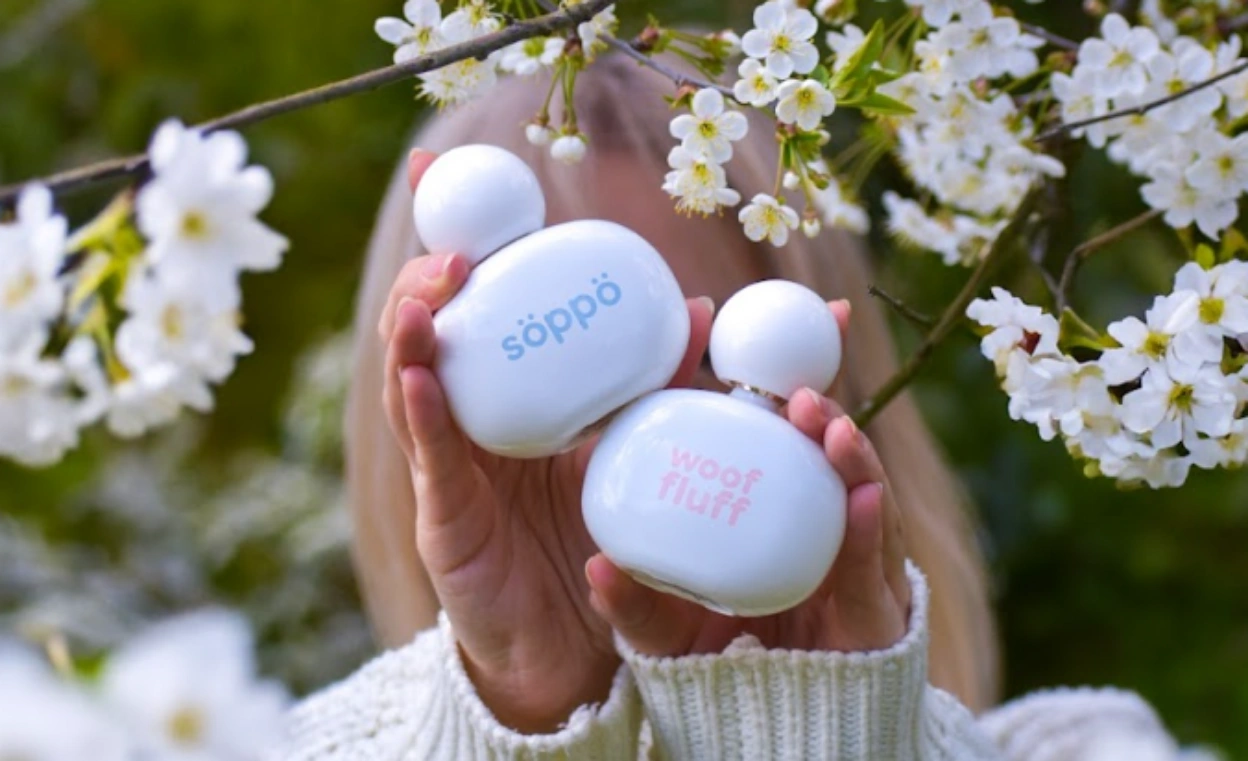
On the other hand, Woof Fluff operates in a completely different register. The bubblegum note is associated more lightly, more playfully, and refers much more strongly to childhood or the early years of adolescence. It does not evoke one specific place, but a whole world of small rituals, school breaks, first crushes, and a carefreeness that is remembered more as a vibe than a single scene. It is such a scent that shows that olfactory memory is very often based on repetitive, everyday experiences that return years later in the form of one familiar aroma.
A different type of association is built by Doggy Siren. Lilac is one of those scents that are almost inseparably linked to a specific time of year. Here, it is not about childhood sweetness or a winter atmosphere, but about spring: warmer air, open windows, blooming shrubs, and the moment when the environment begins to change clearly. Such a scent shows well that an aroma can become a record of a season and a recurring image, not just a specific event. For one person, lilac will be a memory of a garden, for another, the way home or visits to loved ones—but the mechanism itself remains similar.
Similarly works Stinky Stinger, except that instead of spring, it evokes the end of summer. Linden doesn't have to refer to a single scene. It can more likely build a mood: golden light, heavier air, longer afternoons, and that moment when summer slowly begins to end. In scent psychology, such compositions are particularly interesting because they show that the memory of aromas can be less literal than it might seem. Sometimes a scent does not evoke a specific event, but an atmosphere that we recognize immediately, even though it is hard to put into a single sentence.
Another direction is represented by Flutter Butter. Jasmine is very often associated with evening, warm air, and moments that have something more luminous about them because they happen after dark. Such a scent does not have to lead to childhood or family rituals. It can be more connected with transition moments: a night walk, a conversation, a holiday trip, the beginning of a new acquaintance, or simply a period that was recorded as important over time. This is an example of a composition that can build memory more around a mood and stage of life than around a single concrete prop.
Very interestingly in this set is also Fussy Pussy. This is a scent that is not based on clear seasonality or a simple, easy-to-grasp image. Milky and creamy notes more often evoke associations with softness, closeness, a home scene, dessert sweetness, or a moment spent without haste. In this case, olfactory memory seems more sensual and less literal. It's not about one day from the past, but about a type of experience: something very close, familiar, tamed. Such compositions show that aromas can be recorded not only as a memory of a place or season but also as a trace of a specific atmosphere.
A similar, though not identical, mechanism can be observed with Wooly Wolf. Chocolatey and more enveloping notes often do not lead to one closed scene, but to the impression of a denser, calmer moment. They can be associated with the evening, a cooler time of year, soft light, or small rituals of everyday life that gain more meaning over time. It is a scent that builds memory not so much through a specific image, but through a feeling of familiarity and depth.
Different is Cherry Bomb, because it brings a more distinct contrast to this world. Cherry is, on the one hand, a very familiar note because it is associated with fruit, juice, dessert, or summer. On the other hand, in perfume, it can take on depth and a more determined character. Thanks to this, such a scent does not have to refer back to childhood or home scenes. It can evoke more conscious memories related to character, a first stronger impression, the presence of another person, or a situation that stood out against the background of everyday life. Cherry Bomb shows well that olfactory memory is not always built around gentle nostalgia—sometimes it is also based on intensity and contrast.

In this context, Sneaks with Legs introduces yet another type of memory. Lavender is a very recognizable aroma, but its meaning depends heavily on what a given person has encountered before. For some, it will be a memory of home, for others, an evening, a closet smelling of fabrics, a garden, or simple moments that turn out to be surprisingly clear years later. It is a scent more related to everyday life and repetition than to a single intense episode. This is why it complements the other compositions so well: it shows that aromas can transport us in time not only through sweetness, seasonality, or fruity character, but also through the simplicity of scenes that were once the background and today return as something very personal.
All these examples show that scent psychology is not reduced to the question of whether a given aroma is pretty, intense, or characteristic. What matters most is what it was combined with in memory. Some perfumes evoke a December evening, others childhood, others still a garden in May, the end of summer, a night walk, domestic softness, chocolate depth, fruity contrast, or an ordinary scene from everyday life. And that is why perfumes show so well that olfactory memory is simultaneously shared as a mechanism and very individual in its reception.
Why Does Everyone Perceive Scent Differently?
Although the mechanism of olfactory memory is universal, the perception of aromas itself remains very individual. The same scent can be associated with completely different moments, places, and relationships for different people. For one person, the scent of lavender will evoke evenings at their grandmother's house, for another, the smell of a beautician, and for someone else, the image of a summer garden. The smell of coffee, bread, smoke, or oranges works similarly—we recognize them similarly, but the meaning recorded in memory can be completely private.
Many factors influence this: the home in which one grew up, the rhythm of everyday life, family customs, the season, culture, as well as the intensity with which a given aroma appeared in the past. If a scent was present at important events or regularly returned in a specific context, over time it begins to build very characteristic associations. This is why one scent can mean safety and closeness to someone, while remaining completely neutral to another.
Scent psychology thus shows that aromas are simultaneously universal and personal. Universal, because many people recognize similar notes and combine them with specific types of situations. Personal, because the final meaning of a scent is only created in contact with a person's experience. This is what makes olfactory memory so interesting—it works according to a similar pattern, but almost always leads to a slightly different story.
Summary
Scent and memory are linked in a way that is hard to compare with other senses. This is why aromas so easily trigger memories and become carriers of specific associations. Scent psychology helps us understand that it's not just about recognizing a pleasant or intense scent, but about the entire context stored in memory: the place, the season, a relationship, a daily ritual, or the atmosphere of a moment.
The Proust effect, olfactory memory, and individual perception of aromas show that some scents stay with us for a long time precisely because they were present at important, repetitive, or vivid moments. Spiced cola can evoke December evenings, bubblegum childhood, lilac spring, and lavender ordinary scenes that turn out to be exceptionally clear years later. This is particularly visible in perfumes, as each composition can lead to a different type of memory.
Therefore, aromas really can transport us in time—not in a literal sense, but through the memory, associations, and images that have been recorded in us. Sometimes a single familiar scent is enough for not only the moment itself to return, but also its light, pace, and meaning. And perhaps that is why scent remains one of the most personal ways of remembering everyday life.
Frequently Asked Questions
Many people are familiar with the situation where a specific aroma suddenly becomes associated with a place, season, or period of life. This is what olfactory memory and the phenomenon known as the Proust effect are based on. This is the term for a situation in which a scent or taste unexpectedly triggers a very clear memory. It's not just about the image from the past itself, but also about the atmosphere of the moment, the details of the surroundings, and the associated thoughts. The sense of smell is strongly linked to areas of the brain responsible for memory and the emotional reception of experiences. Thanks to this, some aromas evoke known images, places, and moments faster than other stimuli. No. The same aroma can evoke different associations in different people because olfactory memory is linked to individual experience, daily rituals, relationships, and the context in which a given scent previously appeared. Most often because they have accompanied similar situations over the years and returned at specific times. Spicy notes can be associated with winter and the December atmosphere, and sweeter aromas with childhood rituals, school memories, or home scenes. No. Scents can evoke both positive memories and more ambiguous or difficult associations. It all depends on what a given scent was previously combined with in memory. Perfumes often become carriers of a specific atmosphere, season, relationship, or stage of life. One composition can be associated with childhood, another with an evening, a trip, adolescence, or simply someone's presence. Yes. The mechanism of olfactory memory is similar, but the associations themselves remain very personal. That's why two different people can perceive the same composition completely differently.1. Can scent really evoke memories? ▼
2. What is the Proust effect? ▼
3. Why do scents connect so strongly with memory? ▼
4. Does everyone perceive the same scent in the same way? ▼
5. Why are some scents associated with the holidays and others with childhood? ▼
6. Does olfactory memory only apply to pleasant memories? ▼
7. How do perfumes link to olfactory memory? ▼
8. Can a scent mean something different to every person? ▼
A Few Words from the Author
I have always been fascinated by the fact that scent can return faster than a thought. Sometimes a very small impulse—a note of lilac, bubblegum, lavender, or something spicy—is enough, and suddenly not only a specific moment is remembered, but also its light, pace, and mood. That's why the topic of olfactory memory is so close to me. It's not about literalness, but about associations that are recorded somewhere between everyday life and emotions.
When creating Söppö fragrances, I often think precisely about such small time capsules. About aromas that don't have to explain anything to evoke something. Sometimes it's a trace of childhood, sometimes an image of summer, and sometimes just a familiar impression that cannot be immediately named. And maybe that's why scent is such an interesting language for me—very personal, but at the same time full of shared experiences.
In the article, we refer to selected fragrances from the Söppö collection as examples of olfactory memory and individual perception of aromas. The described associations are subjective and do not constitute a promise of a specific effect of the perfume.